By Hajar Ahmed
When it comes to understanding your college degree’s ROI, should you listen to your college educators or to your future employer?
During the opening remarks for the release of a recent study by Gallup and the Lumina Foundation, Brandon Busteed, Executive Director of Education for Gallup, shared a shocking statistic with the crowd. While 96% of college educators are confident in their ability to prepare students for employment, only 11% of employers agree that colleges are meeting the demand.
How can there be such a massive discrepancy between what “preparation” for the workplace looks like? What are institutions – or students – doing wrong in the process? More importantly, who is to be held accountable?
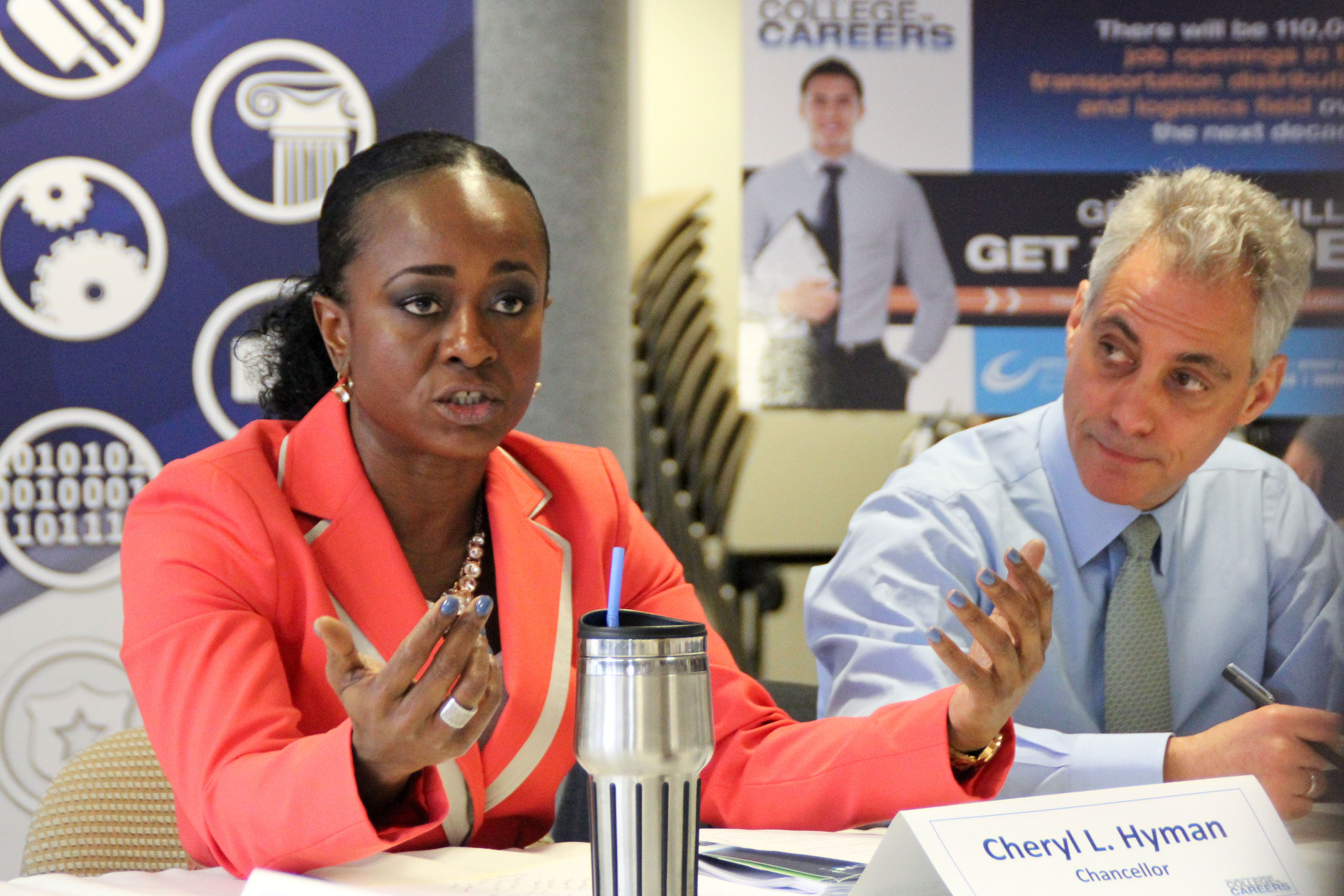
Cheryl Hyman, Chancellor of City Colleges of Chicago and panelist at the Lumina-Gallup release event, might have a promising idea: develop a two-fold accountability system that holds institutions and students accountable for success.
For example, City Colleges of Chicago has tackled the information gap problem by taking active steps to ensure that the information and resources that students need is readily available and accessible through their Reinvention initiative. First steps included tripling the number of college advisors to cut the student to advisor ratio in half and launching the GradesFirst early alert and appointment management system to identify students marked absent or struggling with their coursework and target them for support.
Hyman also launched a “Student GPS Pathway” project that identifies relevant industries that represent the job market and what four-year colleges look for, and placed them in clear semester-by-semester pathways. City Colleges then help students navigate through class schedule planning, see what majors are available and what career opportunities are tied to them, and understand how the skills they’re currently learning align with jobs currently available in the market.
Though part of this approach also requires the student to be proactive and fully take advantage of the opportunities present, the strategy has more to do with what colleges bring to the table, says Hyman. To put it bluntly, when comparing the relevance of the coursework students take to the skills that employers seek, Hyman says, “If it’s irrelevant, we don’t have it”.
Such a model sets up a dual accountability system. One that requires institutions to provide relevant and high-quality training and support for students and the other for students to follow through on their commitment to being engaged and motivated degree- seeking individuals.
But employers also have a responsibility in contributing to the education of colleges on the vastly changing demands of the market – and they need to do so urgently and proactively. When such a relationship is formed, college curricula can be adjusted to meet the needs of what knowledge and skills the market demands in real time and in the future – not two, five, or ten years later. Students should then get hands-on experience on those new skills so that their education isn’t purely theoretical training. As Eduardo Padrón, event panelist and President of Miami Dade College, noted, “We must also prepare students for jobs that are not present today”.
City Colleges of Chicago has a promising model that begins to answer some of these concerns. Initial data also suggests that this kind of an accountability system works. Just recently, for example, City Colleges of Chicago doubled the number of degrees awarded from 2,000 to 4,000 after implementing Hyman’s new reinvention campaign. If all colleges could implement a similar model – and build into it an employer feedback loop – we could see the gap between educator and employer perceptions of workforce preparation close at a much faster rate. By holding institutions, employers, and students responsible for student success, we can begin to see a system that gives as much to its students as it expects out of them.