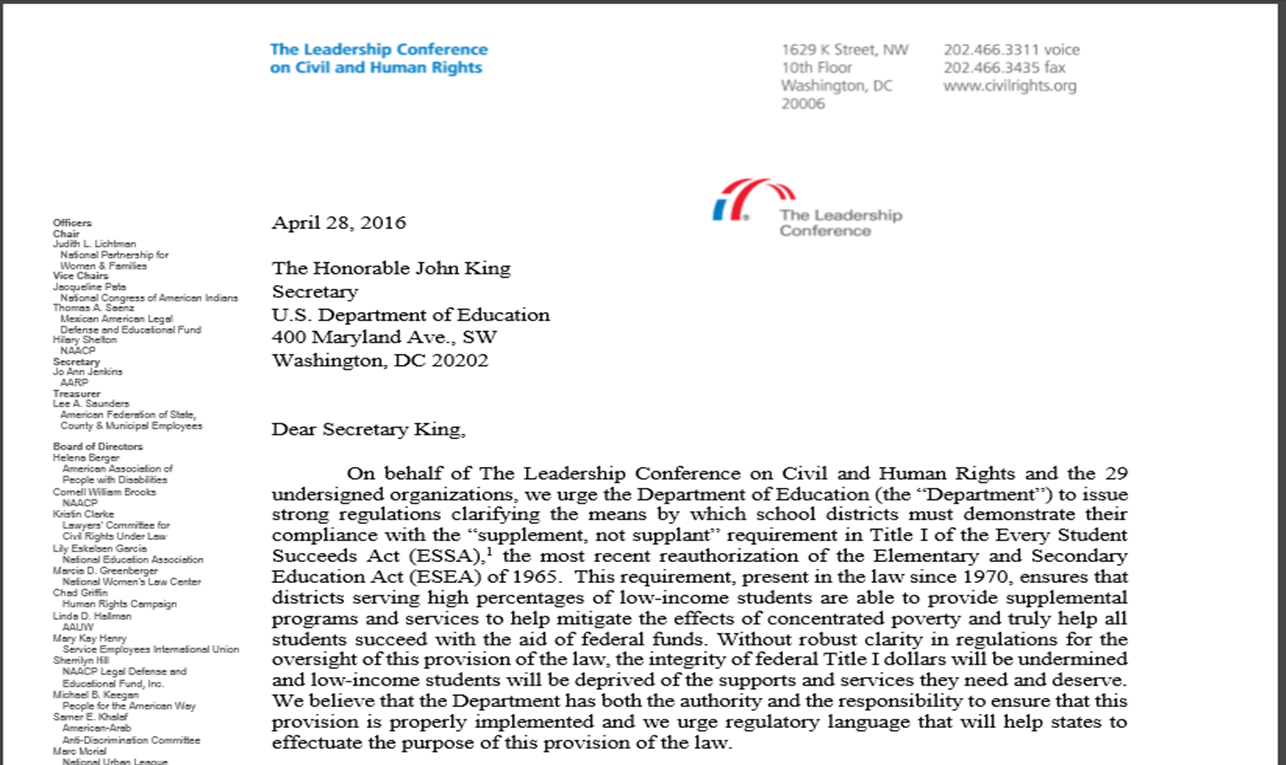
It wasn’t long ago that states like Mississippi admitted that Title I funding was used to build and equip cafeterias and libraries, to hire teachers, and to provide instructional materials and books to Black students that had long been available to White students. This is known in technical terms as “supplanting,” which, albeit less blatantly, many states and districts still do due to weak regulatory oversight. Read the letter we co-signed today with the Leadership Conference on Civil and Human Rights, the NAACP, NCLR, and others urging USDOE, once and for all, to end this shell game and enforce the law’s requirement that Title I funds supplement, not supplant, state and local resources intended for low-income and minority students.
Education on the Back Burner: Why Congress Might Not Settle the NCLB Debate Until 2016
In The 74, Charles Barone discusses accountability and prospects for ESEA reauthorization.
You can say it’s inconvenient, and you can say it’s hard, but it’s our responsibility to do something for those kids.
Just because it’s going to be hard to figure out doesn’t mean you shouldn’t do it.
Read more at The 74.
Education Focus Needed to Help America’s Working Families
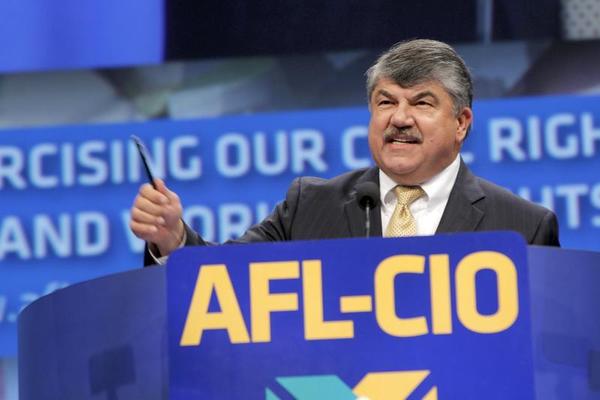
In America’s longstanding fight to expand job opportunities and improve social equality, the largest socioeconomic influencer is often grossly forgotten: education. And the country’s most powerful labor group can be the one to change that, if it resolves the conflicting interests between union members whose children attend public schools and teachers unions that often work against the interests of those same children.
Read more at Real Clear Education