DFER DC: Mission, Vision and Values

Our Vision

 A public education system in Washington, D.C., that justly and equitably serves all students. 

Our Mission

To recruit, educate, and help elect Democratic and progressive candidates who are committed to creating a public education system in Washington, D.C., that justly and equitably serves all students.

Our Values

Student-centered.

  • We are committed to prioritizing the success and well-being of students above all else. 
  • We are committed to examining our policy priorities continuously to ensure that they are truly student-centered.
  • We are committed to defending and advocating for just and effective policies that are in the best interests of students, even if those policies are unpopular or politically inexpedient. 
  • We are committed to evidence over ideology, and to policy outcomes over political victories.

Anti-racist.

  • We are committed to being anti-racist both in education and in our daily lives. 
  • We are committed to examining and understanding our work through the lens of equity and racial justice.
  • We are committed to breaking down the systemic barriers that perpetuate these injustices and inequities.
  • We are committed to including in our policy formation and advocacy efforts the voices of historically marginalized communities.

Honorable.

  • We are committed to operating in all aspects of our work with honor and humility.
  • We are committed to acknowledging and learning from our past, and to continuously improving, as individuals and as an organization.

Collaborative.

  • We are committed to working collaboratively, both within our organization and across the ecosystem of education, social-justice advocates, families, and communities.
  • We are committed to acknowledging and appreciating all opinions, valuing the diversity of people and perspectives.
  • We are committed to understanding and working within the interconnected nature of social justice work, acknowledging that harm and injustice anywhere affects students and families everywhere.

DFER DC Statement on National Voter Registration Day

Today, Democrats for Education Reform DC (DFER DC) celebrates National Voter Registration Day with millions of Americans who hope to inspire all eligible voters to exercise their right to be heard at the ballot box. 

Voting has never been more important. With a public health pandemic claiming lives and upending our economy, a critical U.S. presidential election, the threat of another Republican appointment to the U.S. Supreme Court that could roll back critical civil rights protections, and key local races that will determine the next DC Education Champions, we must ensure DC residents are well-informed and able to exercise their right to vote. As Barack Obama said, “There’s no such thing as a vote that doesn’t matter. It all matters.”Next week, DFER DC will release its first-ever DC Education Champions Voter Guide. This guide aims to help DC voters learn where the candidates stand on issues affecting public education. It will be available at dc-edchampions.org through Election Day on November 3.

If you are not registered to vote in DC, we encourage you to do so by October 13, 2020 at https://www.dcboe.org/Voters/Register-To-Vote/Register-to-Vote. DC also offers same-day voter registration during early voting and on Election Day. (You will need to bring proof of residence with you.) All active voters should receive a mail-in ballot at their registered address beginning the first week in October. All DC mail-in ballot voters must sign the outside of the envelope before mailing their ballot. For more information go to www.dcboe.org

We encourage all DC residents to vote! 

About DFER DC: DFER DC recruits, educates, and helps elect Democratic and progressive candidates who are committed to creating a public education system in Washington, DC, that justly and equitably serves all students. 

DFER-DC Condemns Racist Language Used By DC Elected Official

WASHINGTON, D.C. (July 22, 2020)—Democrats for Education Reform-DC (DFER-DC) Director Ramin Taheri released the following statement today:

“Public service, no matter the position, is an honor and a privilege. But elected office—being chosen by voters to represent them, to speak for them—to literally voice their desires and demands—is a special calling, one with a host of solemn duties and responsibilities. Our elected leaders are our champions and our advocates, and they must speak of and represent their constituents—and all citizens—with dignity and respect. Their platform should be used to support our communities, encourage allies to rally around them, and advance policies that mitigate historic harms and effect real, lasting change. 

Last week, however, one such leader, ostensibly speaking on behalf of DC at large, demeaned and denigrated the very citizens for whom she should be fighting, using vile and dangerous stereotypes and overtly racist language. It should go without saying that no three-year-old child should be criminalized. But this elected leader went further, invoking race to suggest that a Black child is inherently dangerous or violent; this is the epitome of the systemic racism and hatred that have undermined our democracy since its beginning. For too long, this country has used the demonization of Black children as a rationalization for systematically depriving them of their educational and human rights; consequently leading to disadvantage, discrimination, mass incarceration, and generational poverty. 

At DFER-DC, we believe an equitable, fully funded public education is an essential tool to breaking down the racist systems of our society. The centuries-old system of how children are educated with an anti-Black mindset has done untold damage and must be abandoned immediately. We stand against racism in all its forms and will not hesitate to speak up when we see something that is not right and not just. We expect no less from our elected leaders; in fact, we expect more.

As of today, however, the aforementioned elected leader has offered no apology, no indication that she understands that her comments were wrong and harmful, and no statement suggesting that she is committed to change. At DFER-DC, we know that an apology does not itself provide absolution, but it is an important first step toward healing. Refusing to take this step is unacceptable.

As the late John Lewis, member of Congress and one of America’s great leaders of the modern civil rights movement, noted, ‘when you see something that is not right, not fair, not just, you have to speak up. You have to say something; you have to do something.’ We pledge to speak up, to live our values, and to hold our elected leaders accountable when they are wrong. We hope this is a wake up call for this particular elected leader, and others, to question their own biases, commit to change, and to join the movement to dismantle racism in our public education system.” 

###

DFER-DC Releases Statement on Organizational Values and Ward 4 Primary

WASHINGTON, D.C. (June 7, 2020)—Democrats for Education Reform-DC Director Ramin Taheri released the following statement today on our organizational values and the Ward 4 primary:

“During this election season, DFER-DC endorsed Ward 4 Councilmember Brandon Todd, a champion for education reforms that have helped make D.C. the fastest improving urban school district in the country and have better prepared Black and Brown children for college, career, and life. In furtherance of this, DFER-DC distributed mailers to Ward 4 voters informing them of Janeese Lewis George’s position on divesting resources from traditional police programs, a position that polling showed Ward 4 voters opposed. These mailers oversimplified a more nuanced conversation about public safety without calling out the problematic history of policing Black people, causing misunderstanding and pain on an issue vitally important to the students and families DFER-DC serves. We have taken the time to reflect on the implications of these mailers: We made a mistake, and we have learned from it.

At DFER-DC, we believe an equitable, fully funded public education system is an essential tool to breaking down the racist systems of our society, and we work every day to ensure more Black and Brown children can receive a high-quality public education that allows them to reach their full potential. We also believe that our criminal-punishment, economic, housing, and healthcare systems are interconnected with our school systems and thus educational equity is not possible without racially just practices throughout the policy ecosystem that affects young people and their families. We understand how the mailers we distributed in the Ward 4 election could appear to ignore that interconnectedness and have caused confusion about the values and principles that we hold dear, both personally and as an organization.

Since our founding in 2015, we have been proud to support candidates who have expanded school-based mental health, trauma-informed training, and restorative justice practices, and made sweeping reforms to D.C.’s juvenile justice system. I personally have spent my career fighting for educational equity, working as a civil rights attorney and helping to craft and advance policies that seek specifically to remedy racial injustice. These policies reflect who we are at our core and what we fight for.

As we always have, our team will continue to meet with, listen to, work with, and learn from community members across the city as we seek to achieve our shared goal—a city that puts educational equity and racial justice at the center of our collective work.

And we continue to stand alongside those marching and protesting to disrupt the status quo of inequity and bring about real and lasting change for Black communities.”

 ##

DFER-DC Releases Statement on Combating Systemic Racism

Public Education ‘Essential Tool for Breaking Down Racist Systems’

WASHINGTON, D.C. (May 29, 2020)—Democrats for Education Reform-DC (DFER-DC) Director Ramin Taheri released the following statement today on the role of public education in combating systemic racism:

“DFER-DC is outraged by the killing of George Floyd by police in Minneapolis. We stand with those calling for the fullest prosecution of the officers responsible for the murder. And we stand with, and alongside, those exercising their First Amendment right to protest this injustice.

Like so many Black men and women before him, Floyd had his rights and his life violently taken away because of deep-seated, structural, toxic racism—a systemic racism that has too often allowed Black Americans to be treated as if their lives do not matter. And a systemic racism that pervades American public education. But this must change. We are committed to being part of that change.

At DFER-DC, we believe an equitable, fully funded public education system is an essential tool to breaking down the racist systems of our society, and we work every day to ensure more Black and Brown children can receive a high-quality public education that allows them to reach their full potential. An important step in that direction is supporting champions for great schools who will look at both short- and long-term solutions to improve all students’ outcomes and opportunities.

As Americans know—especially since November 2016—elections have consequences. It is impossible to overstate the importance of having the right people in the right seats; we need elected officials who are wholly committed to the success of our children. As a political organization, DFER-DC works to elect true advocates for educational equity who will fight for all students, particularly historically marginalized students, who deserve and have a right to a high-quality education.

Although public education in Washington, D.C., has come a long way over the past decade due to the many reforms made by strong leaders, all of DFER-DC’s efforts emanate from the fundamental belief that our public education system, as it exists now, does not adequately serve all students, and we will continue to support candidates who will fight for a more equitable future for every child. In doing so, we regularly highlight issues that voters care about, contrasting the positions of our endorsed candidates and their challengers.

For the past several weeks, DFER-DC has been informing voters in Ward 4 about one candidate’s proposal to divest resources from community policing in the District, a position that is deeply unpopular with Ward 4 residents, especially among African American voters. Recent polling shows that 78% of African American voters and 59% of white voters in Ward 4 do not support cutting police from their neighborhood. Any suggestion that this equates to support for police misconduct or brutality is disingenuous and contradicts everything we stand for and believe.

A man was killed this week because he was Black, an occurrence that is tragically too common in our country. We condemn the murder and call for justice. We fight for the promise of what comes next, starting with the system that touches almost every American—public education. While we know that education is not the cure all, it’s an essential tool for dismantling a centuries-old system of injustice. We look forward to uniting with all allies in this work so that one day in the United States, every child will have access to a great education, regardless of their race, ethnicity, socioeconomic status, or the neighborhood where they live. ”

##

Release: Democrats For Education Reform District Of Columbia Congratulates Four Endorsed Candidates For Advancing To November General Election

Democrats For Education Reform District Of Columbia Congratulates Four Endorsed Candidates For Advancing To November General Election

DFER DC Ran Voter Contact Campaign and Spent $300K to Support Progressive Education Reformers

WASHINGTON, D.C. – Democrats for Education Reform‘s DC branch (DFER DC) today congratulates all four of its endorsed candidates for advancing on to the general election in November.  DFER DC endorsed the following candidates because of their track record as progressive education reformers who put student interests first: Muriel Bowser for mayor, Karl Racine for attorney general, Phil Mendelson for DC Council Chair, and Kenyan McDuffie for DC Council representing Ward 5. DFER DC’s Independent Expenditure Committee spent over $300,000 this May and June to reach voters, elevate the importance of education reform, and elect strong education leaders. Expenditures included a canvass in Wards 1 and 6 that will continue through the general election, as well as TV, mail, radio, newspaper, and digital ads to support its slate of endorsed candidates.

“These four candidates’ advancement to the November general election represents the potential and promise of a stronger public education system for all students in DC,” said Catharine Bellinger, DFER DC Director. “These champions of progressive education reform all have strong track records of standing up for the best interests of students. We are proud to support candidates who will work to make sure that all DC students, regardless of race or income, receive the high-quality public education they deserve. Given the significant challenges facing the city’s public schools, it’s more important than ever that we have strong leaders who will work with schools, educators, and parents to close the achievement gap.”

Leading up to this primary election, DFER canvassers engaged voters across the city, with a concentrated field program in Wards 1 and 6. Thousands of voters signed commitment cards pledging to be ‘Education Voters’ and spoke with our canvassers about their hopes for DC public and public charter schools. Canvassers continued working with voters via door-to-door engagement, phone calls, and text messaging. The organization heard voters, particularly parents, ask local leaders to step up to close the achievement gap, improve struggling schools, and expand access to quality schools. Moving forward, DFER plans to partner with District leaders and policymakers to make that vision a reality. The organization will continue engaging with voters directly through the general election in November to elevate the importance of education reform.

An April 2018 poll conducted by Anzalone Liszt Groves and commissioned by Education Reform Now Advocacy, a partner of Democrats for Education Reform, found that there is broad belief among DC voters that local public schools are improving, but that more is needed to close the achievement gap. More than three out of five voters feel that DC public schools are improving (62% agree), and the sentiment is even more pronounced among public school parents (68% agree.) Improving teacher and principal quality was the top priority for voters and parents, with an 87% majority rating improving educator quality is an extremely or very important goal for DC public schools.

About DFER DC’s Endorsed Candidates
Mayor Muriel Bowser
As Mayor, Muriel Bowser has made educator quality and professionalism a top priority, increasing teacher pay through the renewal of the Washington Teachers Union contract while remaining committed to performance-based evaluation. She has also supported increased funding for public charter school facilities, through a four-year commitment to an annual 2.2% increase to charter facilities funding. As she launches the search for a new DC Public Schools (DCPS) Chancellor, DFER looks forward to seeing Mayor Bowser raise the bar for DCPS — only when we hold our schools, educators, and students to a high standard can we advance equity and close persistent achievement gaps.

Attorney General Karl Racine
As the first elected attorney general of the District of Columbia, Karl Racine has made juvenile diversion programs a cornerstone his administration, bringing a data-driven approach to juvenile justice reform that ensures young offenders have a second chance. The Office of the Attorney General, under AG Racine’s leadership, has also worked closely with DC public and public charter schools to reduce truancy and absenteeism through the “I Belong Here” program and social supports for truant students.

DC Council Chair Phil Mendelson
DC Council Chairman Phil Mendelson has been a tireless champion for DC public and public charter students throughout his tenure. The Chairman has been a leader on fighting truancy and chronic absenteeism through his participation on the Truancy Taskforce, and has been an outspoken leader on the need to improve our the quality of our comprehensive high schools. On the Council, the Chairman has protected autonomy for educators in both the DCPS and charter sector while fighting for equal access to resources for all public schools.

Ward 5 Councilmember Kenyan McDuffie
As Ward 5 Councilmember, Kenyan McDuffie has been a close partner to Ward 5 DCPS and public charter schools. He has been a vocal supporter of parent choice and ensuring all students have access to a quality public school that meets their needs, while championing the autonomy our educators need to provide the highest-quality education for all students. Councilmember McDuffie has also been a strong advocate for juvenile justice reform and civil rights, passing the Comprehensive Youth Justice Amendment Act to reduce over-incarceration of young people.

DFER DC’s Testimony at Budget Oversight Hearing for the Deputy Mayor for Education

Catharine Bellinger – Democrats for Education Reform
Testimony at Budget Oversight Hearing for the Deputy Mayor for Education

April 25, 2017

Good morning, Chairman Grosso and members of the Education Committee. My name is Catharine Bellinger and I serve as the D.C. Director for Democrats for Education Reform. I am here today to urge the Council to fully fund our schools by increasing the per-pupil funding by 3.5% this year.

We are at an exciting moment for public education in the District. From 2008 to 2015, enrollment in public schools has risen by 14,000 students. City leaders should look at this enrollment growth positively — as a sign that more families are confident in our public schools. We can only maintain this progress by continuing to provide adequate funds to our public schools.

Unfortunately, Mayor Bowser’s proposed budget for this fiscal year only proposes a 1.5% increase in the per-pupil funding level for our public schools. This proposal sets the Uniform Per Student Funding Formula at a level below the expected rise of inflation and does not keep pace with the rising costs for schools.

Insufficient funding poses a major challenge for schools in the coming school year. Our public school budgets are increasingly squeezed by rising personnel costs — salaries, and in particular benefits like health care. These costs are rising at a rate far exceeding 1.5%. Without a substantive increase to per-pupil funds, schools will be forced to choose between fair pay and benefits for teachers and important offerings like supports for at-risk students and art, music, and extracurriculars.

I urge the D.C. Council to remedy this gap in funding. In January, the Uniform Per Student Funding Formula working group convened by OSSE recommended a 3.5% increase to the per-pupil funding level. A 3.5% increase would fully fund our schools, keeping pace with rising costs and with inflation, and ensuring that all students have access to the resources they need. School finance experts, educators, parents, and constituents agree.

There is certainly room for excitement about the Mayor’s proposed budget. We thank Mayor Bowser for increasing the facilities allotment for public charter schools by 2.2% annually for four years. With this four-year commitment, schools can now make needed improvements to their buildings or lease facilities that are more sufficient for the size of their student bodies. We thank the Mayor for making a long-term investment that will provide tens of thousands of students with better learning environments.

But a place to learn is not enough — it’s what happens inside the building that leads to better outcomes for our kids. Students in all our public schools deserve schools where we can afford to attract and retain great teachers, reduce turnover, provide necessary in-school supports such as tutoring and counseling, and offer the activities like art, music, and extracurriculars that help make school a joyful place for kids to learn. I urge the DC Council to follow the recommendations of the OSSE working group and increase per-pupil funding by 3.5% so that our public schools can rise to these challenges.

Thank you Chairman Grosso and members of the Education Committee for your time, and for your commitment to high-quality public education for all students in the District.

DC Students and DC TAG Lack Meaningful College Options

By Mary Nguyen Barry

Students and families in Washington, D.C. are stuck between a rock and a hard place.

As in many cities, DC students face a number of education realities specific to an urban public school environment: segregated schools, inequitable facilities, and inequitable school resources.

But unlike most students who successfully navigate the system to high school graduation, students in Washington, D.C. face a challenge unique to the nation’s capital: they have essentially zero “in-state” public college options. All four-year college options are effectively private.

The lack of meaningful in-state public college options is one of the biggest policy issues facing D.C. high school students, said Jessica Cunningham, the principal at KIPP DC College Preparatory in Northeast.

Now technically, students do have options. They can either attend the University of the District of Columbia (UDC) or they can attend a public college out of state and receive a discount provided by the D.C. Tuition Assistance Grant Program (DC TAG).

But let’s be real.  Only 6 percent of students graduate from UDC within four years. And the discount provided by DC TAG – a program designed to give D.C. students in-state rates at colleges outside the District – is no longer achieving its goal.

Congress created the DC TAG program in 1999 to expand college choices for D.C. residents.  Recognizing the unique challenges faced by the lack of D.C. statehood, Congress provided annual grants of up to $10,000 to cover the difference between in-state and out-of-state tuition at public four-year colleges and universities nationwide (and up to $2,500 per year for public community colleges).

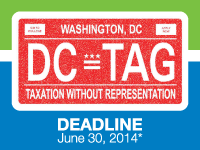
dc tag license

Presumably when the law was originally passed, $10,000 was more than enough to cover the in-state vs. out-of-state difference. But as states have cut financial support of their public colleges and universities in recent years, colleges have jacked up both their in-state and even more so out-of-state tuition rates to compensate. The impact on D.C. students is that their $10,000 voucher is no longer enough to meet the difference in tuition prices. So just as Pell Grants have failed to keep pace with rising college prices, so have the DC TAG grants. And ergo, DC students have another barrier – specifically tied to where they live – to college affordability and completion.

What should one do? A few options are possible:

  1. Congress could raise the maximum DC TAG amount above $10,000 so the program fulfills its initial goal of providing DC students in-state tuition;
  1. Congress could raise the maximum DC TAG amount and implement additional minimum college quality provisions to fulfill the broader goal of providing DC students with a meaningful in-state public school option; or
  1. Congress could implement our Tough Love proposal whereby nonprofit (public and private) college dropout factories like UDC receive extra financial support and assistance to improve graduation rates. But if improvement doesn’t occur after a specified period of time, they lose access to federal financial aid and tax benefits.

Option 1 adheres most closely to the original goal for DC TAG. However, it functions as an inefficient stop-gap measure if college tuition continues to rise.  In that sense, it would operate similar to the Pell Grant program that continually fails to keep up with rising college prices. It also misses an opportunity to attack the broader problem that Cunningham noted – the lack of meaningful public options for DC residents.

Option 2 would help boost DC TAG’s purchasing power but also raise the bar on what makes a college eligible for DC TAG funds.  Currently all public colleges across the United States are eligible to receive DC TAG funds (a smaller $2,500/year grant to private HBCUs and private colleges in the DC Metropolitan area is also available). But that doesn’t have to be the case. DC TAG could implement minimum institutional eligibility requirements – say only public colleges that fall in the top 95 percent of colleges nationwide in graduation rates or student loan repayment rates may receive DC TAG dollars.

Option 3, in combination with Option 2, would further heighten resources and consequences for low-performing colleges.  Let’s help UDC and other college dropout factories improve to become a meaningful option for students instead of a provider most likely to leave them in a worse financial position than had they not enrolled in the first place.

DC residents should not tolerate the fact that the only honest-to-goodness four-year public college within city boundaries has a 6 percent four-year graduation rate.

A meaningful public college option for DC residents and others requires improving the city’s current university and expanding the application of that definition nationwide.

Is the city and Congress, including Congresswoman Eleanor Holmes Norton (D-DC), tough enough to do it? Or will they continue to shortchange deserving DC students from meaningful college opportunities?

RELEASE: Poll Shows DC Parents Want Expanded High-Quality Educational Options

FOR IMMEDIATE RELEASE

Poll of DC Voters Shows Parents Want to Expand High-Quality Educational Options in DC

Poll finds support for expansion of high-performing schools in vacant buildings and cross-sector partnerships to turn around under-performing schools

Washington, DC – Today, Education Reform Now’s DC Chapter released the results of a survey of registered voters in Washington, DC, regarding attitudes toward public education in the city. Conducted by the Benenson Strategy Group, the survey found that while voters see improvement in the quality of public schools, they also view that progress as lopsided, with more significant progress in higher-income neighborhoods. Voters believe city leaders must act now to address these inequities to ensure fair access to educational opportunity for all public school students. They overwhelmingly support allowing successful schools, both district and charter, to expand in vacant school buildings in order to reduce waiting lists at the most popular schools and expand the number of high-quality seats available in the city.

“These poll results could not be more clear. Eight years after the reforms enacted under mayoral control, DC voters feel that we have made significant improvements to the quality of the city’s schools. We’re going in the right direction — but there is still more work to be done, particularly in low-income neighborhoods, to ensure fair access to quality schools. Voters also know that if we are going to keep young families in the District, we have to make sure children in every neighborhood can attend a high-quality public school. We must accelerate what’s working to improve the quality of traditional schools, and we need to reduce waiting lists and crowded classrooms by opening more top-performing public charter schools,” said Catharine Bellinger, Director of Education Reform Now’s DC Chapter.

“The 12 vacant former school buildings in DC – which represent a total of nearly 1.4 million square feet–provide the perfect opportunity to expand high-quality options for our families. Rather than letting taxpayers foot the bill while unused buildings become increasingly dilapidated and vandalized, let’s accelerate the release of more of these buildings to our highest-performing and most popular public charter schools.”

Conservative estimates project that DC’s population of public school students will grow to 125,000 by 2025. That means that within the next ten years, DC will need to serve an additional 40,000 children in DCPS and public charter schools. The poll findings show that DC parents want to invest now to improve DC schools, particularly by increasing capacity in the most popular schools, so that every child can access a high-quality education.

Some key numbers from the poll include:

  • 7 in 10 voters agree (including 75% of parents) that “schools are improving in upper-income areas of DC, but schools in lower-income parts of the District are being neglected.”
  • 76% of voters, including 83% of parents, agree that “in order to keep young families in DC, we need to improve the quality of traditional DCPS schools, but we also need to expand the top-performing public charter schools so more parents can choose a school that is right for their child.”
  • 3 in 4 voters (76%) believe public charter schools should be part of the solution for vacant school buildings.
  • 2 in 3 voters (65%) support a proposal for DCPS to partner with a “top-performing public charter school” to help turn around struggling schools.

The poll was conducted by Benenson Strategy Group from September 28-October 6, 2015, and includes data from 686 telephone interviews. All respondents are registered voters in Washington, DC, and an oversample of parents and cell phone users was included to ensure accurate representation in the survey. The margin of error for the data set is +/- 3.7% at the 95% confidence level. The margin of error for parents is +/- 5.9% at the 95% confidence level.

The full polling memo can be found here.

###

Contact:
Catharine Bellinger
202-361-9172

our newsletter.