A Parent’s Heartbreak to See College Dreams Crushed

By Marianne Lombardo

There’s no heartbreak worse than seeing your child struggle. And when they struggle to make a successful college transition, it can impact the rest of their life. In my son’s case, the public K-12 schools and the college of his dreams got paid, but he got a pink slip.
Blvd Broken Dreams

Like all parents, I wanted my kids to achieve success in life. I very purposefully moved us to one of the highest-performing (and very expensive, greatly stretching our middle-class income) suburban districts in the state to assure they would get a good education.

My son’s school experience was generally good. He got mostly good grades and easily passed the Ohio Graduation Test the first time without any issues (attaining a $500 college stipend the state provided). We found a public four-year college with a program that perfectly matched his interests and felt great that we did all we were supposed to do to launch him toward the career of his dreams.

But, it all crashed down. He only attended one quarter. He left because, surprisingly, he was not prepared for the academic demands of college. It was a surprise because it had never been pointed out by his suburban high school that his writing skills were not up to college readiness standards. That surprise deficit did him in.

struggling student
 

The program my son wanted to enroll in at college required students to attain an “A” or “B” in a required introductory course taken during the first quarter. But because of his apparent poor writing skills, he got a “C.” Crushed that he would not be able to attain a degree in the field he had chosen, he dropped out.

My son moved back home with me and enrolled in community college, where he was placed not only in a remedial writing course, but also in a remedial math course. We paid thousands for these courses, to help him relearn what he should have learned in high school, and all the while none of it counted toward a degree. He attended community college on and off for another year and a half before eventually dropping out due to work opportunities and not seeing a clear path toward how college would add value in a career field. He has never finished a college degree and is still paying back student loans.

Our story closely matches data found by my colleagues, Mary Nguyen Barry and Michael Dannenberg, in their report “Out of Pocket: The High Cost of Inadequate High Schools and High School Achievement on College Affordability.”

It really hurts to see your kid not be able to attain his dream.

I feel as if our public education system failed him – both the highly acclaimed “public-private” district (where you can’t attend unless you can afford the $300K housing cost) that didn’t adequately prepare him, and the publicly-funded State University that whiplashes kids that didn’t get an adequate preparation from their high school.

I’m not saying kids should get a free pass, but our education system should be doing everything possible to help kids find success. In our experience, there was a complete lack of alignment between what we were told by the district (get good grades), what we were told by the state (pass the Ohio Graduation Test), and the reality that he did not have college readiness skills. The kicker is that once he graduated high school, the problem was ours alone: there was no responsibility or ownership on the part of the district, the state, or the college. We paid the additional price.

Our state has since increased the rigor of its state assessments, and there’s much more opportunity to get ongoing, honest, and objective feedback on how your child is doing based on these assessments every year they are tested. I hope parents understand the value of this information and use it to help if their own child needs intervention before they are cut loose from the K-12 system.

If we had better information, and if the high school had been required to provide intervention for kids that needed shoring up before they left for college, perhaps we would have been left with more than financial costs and a lifetime of wishes for what could have been.

Memorial Day Observance

download (1)

Why does congress get all the fun? We’re taking the week off in observance on Memorial Day. Check back next week for our regularly scheduled blogs!

Colleges Think They’re Preparing Students, Employers Don’t: Who’s right?

By Hajar Ahmed

When it comes to understanding your college degree’s ROI, should you listen to your college educators or to your future employer?

During the opening remarks for the release of a recent study by Gallup and the Lumina Foundation, Brandon Busteed, Executive Director of Education for Gallup, shared a shocking statistic with the crowd. While 96% of college educators are confident in their ability to prepare students for employment, only 11% of employers agree that colleges are meeting the demand.

How can there be such a massive discrepancy between what “preparation” for the workplace looks like? What are institutions – or students – doing wrong in the process? More importantly, who is to be held accountable?

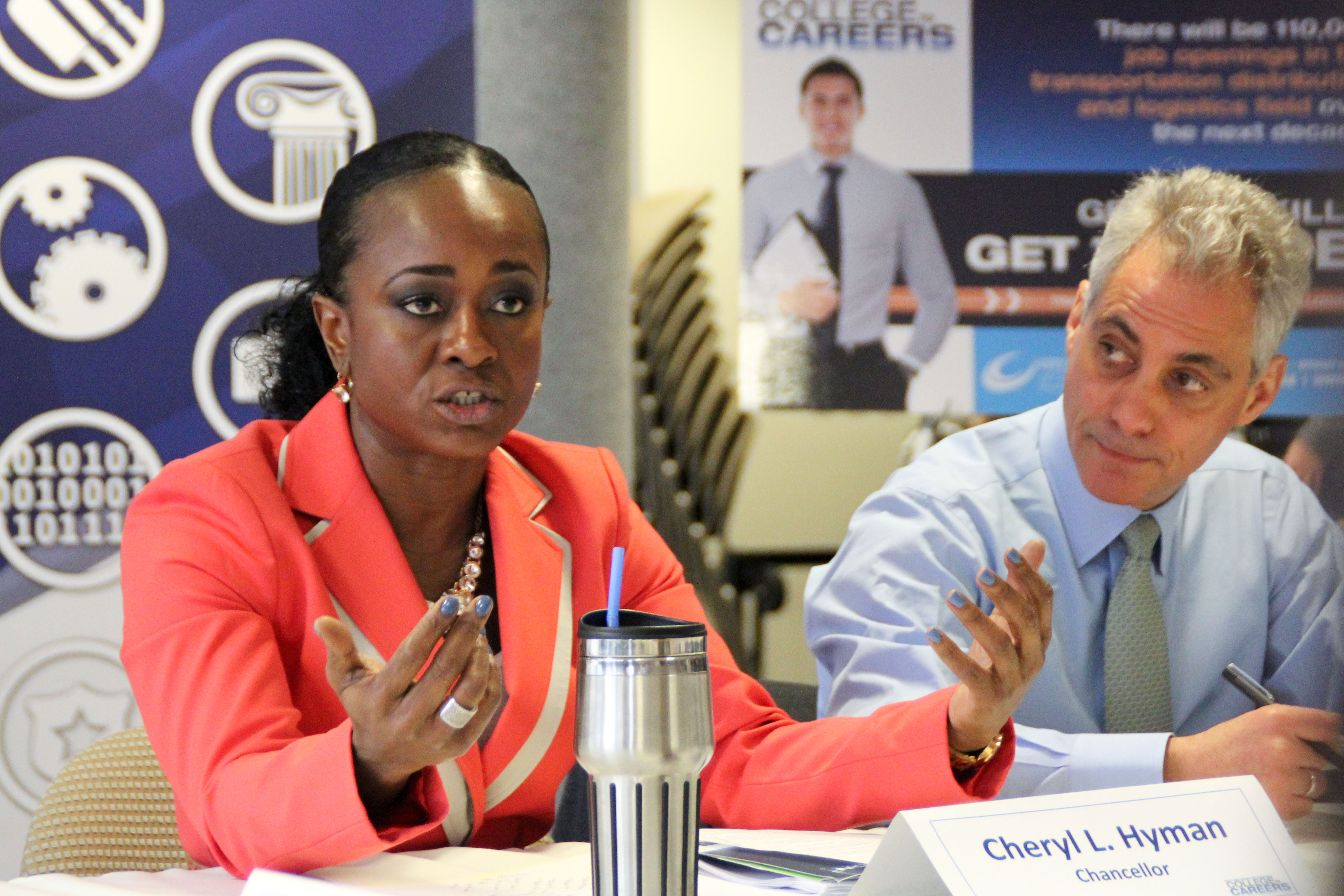
Cheryl Hyman, Chancellor of City Colleges of Chicago and panelist at the Lumina-Gallup release event, might have a promising idea: develop a two-fold accountability system that holds institutions and students accountable for success.

Chancellor and Mayor Emanuel_World Bank visit

For example, City Colleges of Chicago has tackled the information gap problem by taking active steps to ensure that the information and resources that students need is readily available and accessible through their Reinvention initiative. First steps included tripling the number of college advisors to cut the student to advisor ratio in half and launching the GradesFirst early alert and appointment management system to identify students marked absent or struggling with their coursework and target them for support.

Hyman also launched a “Student GPS Pathway” project that identifies relevant industries that represent the job market and what four-year colleges look for, and placed them in clear semester-by-semester pathways. City Colleges then help students navigate through class schedule planning, see what majors are available and what career opportunities are tied to them, and understand how the skills they’re currently learning align with jobs currently available in the market.

Though part of this approach also requires the student to be proactive and fully take advantage of the opportunities present, the strategy has more to do with what colleges bring to the table, says Hyman. To put it bluntly, when comparing the relevance of the coursework students take to the skills that employers seek, Hyman says, “If it’s irrelevant, we don’t have it”.

Such a model sets up a dual accountability system. One that requires institutions to provide relevant and high-quality training and support for students and the other for students to follow through on their commitment to being engaged and motivated degree- seeking individuals.

But employers also have a responsibility in contributing to the education of colleges on the vastly changing demands of the market – and they need to do so urgently and proactively. When such a relationship is formed, college curricula can be adjusted to meet the needs of what knowledge and skills the market demands in real time and in the future – not two, five, or ten years later. Students should then get hands-on experience on those new skills so that their education isn’t purely theoretical training. As Eduardo Padrón, event panelist and President of Miami Dade College, noted, “We must also prepare students for jobs that are not present today”.

City Colleges of Chicago has a promising model that begins to answer some of these concerns. Initial data also suggests that this kind of an accountability system works. Just recently, for example, City Colleges of Chicago doubled the number of degrees awarded from 2,000 to 4,000 after implementing Hyman’s new reinvention campaign. If all colleges could implement a similar model – and build into it an employer feedback loop – we could see the gap between educator and employer perceptions of workforce preparation close at a much faster rate. By holding institutions, employers, and students responsible for student success, we can begin to see a system that gives as much to its students as it expects out of them.

Cap Student Debt in North Carolina, Not Student Aid

By Hajar Ahmed
unc grad

This past weekend, I took on the UNC Board of Governors’ new tuition and financial aid policy in an op-ed to the Charlotte Observer.

Read more at the Charlotte Observer and go to capncstudentdebt.org to sign the petition.

The North Carolina Board of Governors should take notice: after a year of intense lobbying and opposition from students and the broader community, the Board of Visitors at the University of Virginia announced it would lower the student loan debt burden for low- and middle-income Virginian families who were previously required to borrow up to $28,000 in college loans. North Carolina should be doing the same, but instead is moving in the opposite direction and prompting an increase in student loan debt…

our newsletter.